Thank you Saudi Arabia for expanding drone war in Yemen

That’s what a good, autocratic ally does for America; remain dictatorial while “fighting terrorism”. The New York Review of Books:

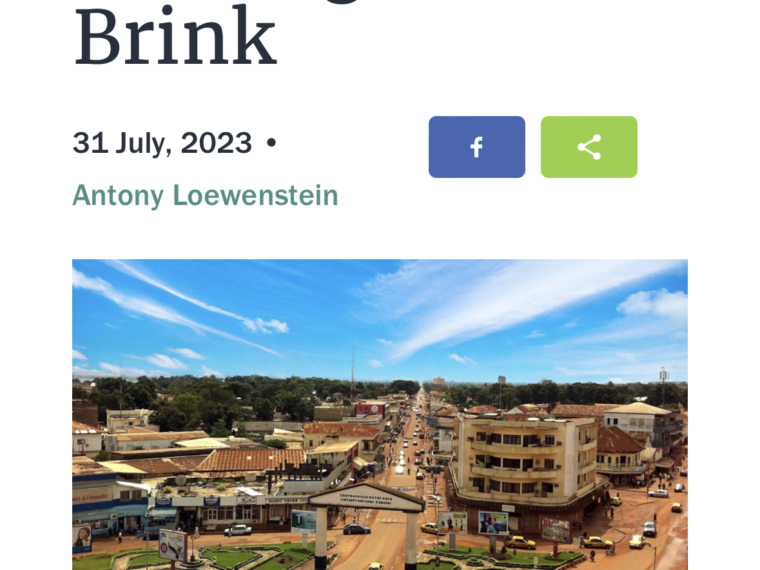
The United States is quietly being drawn into an escalating conflict in Yemen. Following the discovery earlier this month of a new bomb plot aimed at American airliners, the US government has been aiming drones at alleged members of al-Qaeda in the Arabian Peninsula (AQAP) at an unprecedented rate. Last week, US and Yemeni officials revealed that US special operations forces are on the ground in Yemen and that more may be on the way. Meanwhile AQAP, the Yemen-based organization now regarded by some officials as one of the principal terrorist threats to the United States, has stepped up attacks around the country, including asuicide bombing in Sanaa, the Yemeni capital, on Monday, that killed at least sixty people.

The new conflict may be as much about Saudi Arabia, the longtime US ally and Yemen’s northern neighbor, as it is about Yemen. To its continuing embarrassment, Saudi Arabia has long been known as the country that produced Osama bin Laden and fifteen of the nineteen September 11 hijackers. In recent years, the Saudi government has done much to reverse that image, in part by dramatically beefing up its own counterterrorism credentials and by becoming one of Washington’s key backers in the war against Al Qaeda. And yet, as I learned during a visit to Riyadh and other Saudi cities this month, it has struggled to contain another reality: that many members of AQAP are Saudi nationals who have relocated to Yemen, where they have been able to operate in relative freedom.

What seems clear is that Saudi Arabia has become a key backer—and at times coordinator—of the accelerating US drone war and special operations offensive in Yemen, partly for its own security interests. Interior Ministry officials in Riyadh speak enthusiastically about the US drone program, and on May 12, drone strikes allegedly killed some eleven AQAP suspects, two of them Saudi nationals. (It is worth noting, following the controversial killing of US citizen Anwar al Awlaki, that Saudi Arabia does not appear to have many qualms about killing its own citizens in Yemen.)

Perhaps most important for the Saudi government, a successful counterterrorism policy carries enormous political value amid the upheavals of the Arab Spring. Even more than democratization or regime change in the region, the Saudi rulers seem to fear instability and unpredictability: though they have reluctantly supported the transition of power in Yemen, they are particularly nervous about the kind of extremism that has emerged in neighboring countries like Iraq, Yemen, and now Syria, when uprisings turn into violent conflict or authority breaks down entirely—places where Saudi jihadists have often found new causes. “Syria will be tempting to al-Qaeda,” Abdulrahman Alhadaq, a Saudi counter terrorism official, said in a briefing in Riyadh. “We need to avoid another Iraq.”

no comments

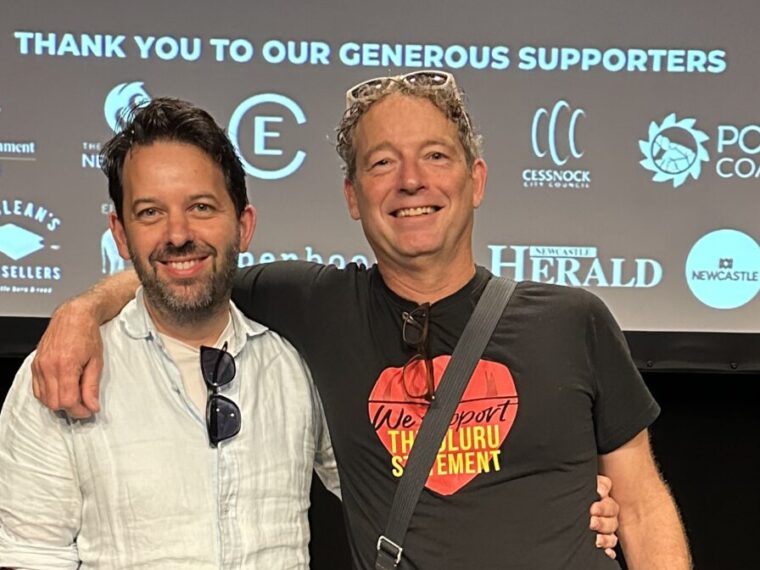
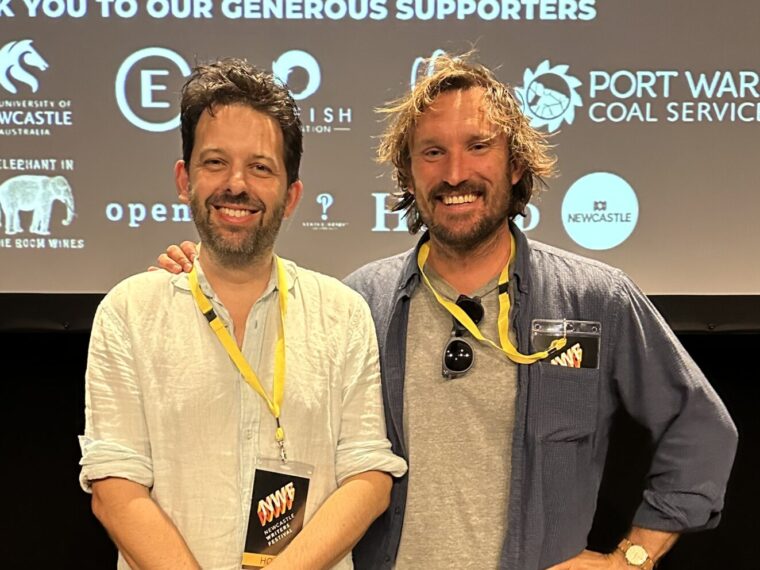
Sydney Writer’s Festival photos

Last week’s first public event for the new book by Jeff Sparrow and yours truly, Left  Turn:

And the 2012 PEN Free Voices lecture:

The rest of the collection is here.

no comments

Getting #LeftTurn debate going over gay marriage and equality

A book I co-edited with Jeff Sparrow, Left Turn, is about to launch.

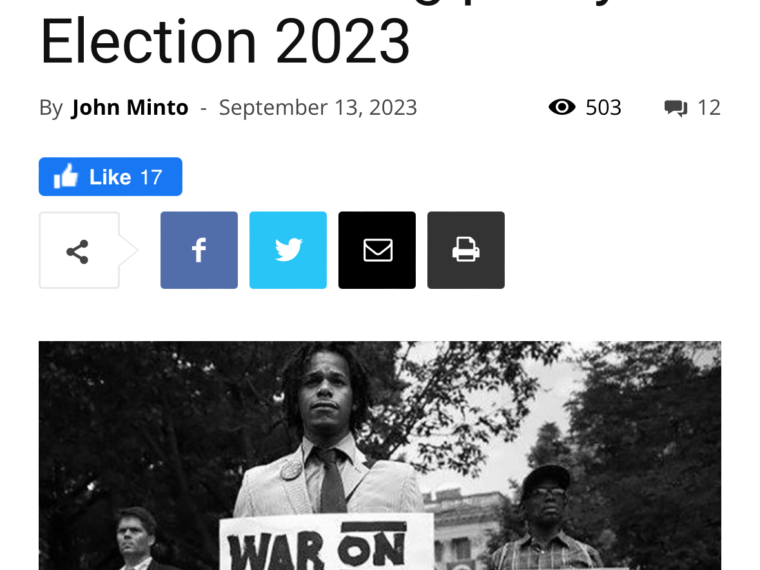
One of the contributors, Rodney Croome, a strong advocate of gay marriage, has written a powerful piece in ABC’s The Drum about this issue:

The American civil rights movement was a colourful but hollow distraction from the far more important issue of America’s war in Vietnam, and that is why presidents Kennedy and Johnson supported it.

If you find this statement trite, offensive and wrong then you may react the same way when you read John Pilger’s analysis of Barack Obama’s support for same-sex marriage.

Pilger believes the Obama administration is attempting to divert attention from wars abroad and wealth disparity at home, and raise more money from Hollywood, by endorsing marriage equality.

He has no evidence for these links. His analysis also doesn’t explain why Obama took so long to “evolve” on the issue and seems to have been moved to act by an unscripted endorsement of the issue by Joe Biden. 

Nor does Pilger allow for the fact that a cause can be right even if the motives of some of its supporters are less than pure, or just not the same as his.

Pilger would probably respond by saying my comparison between black civil rights and same-sex marriage is unfair because, in his words, the latter is about “lifestyle liberalism”.

Such a casual dismissal of marriage equality is not just because Pilger doesn’t believe marriage matters much. He believes marriage is part of the problem: “The rights historically associated with marriage are those of property: capitalism itself,” he writes.

“Bourgeois acceptability is not yet a human right.”

Pilger’s same-sex marriage blind spot is not uncommon among left-wingers his age. Many older lefties retain an outdated view of marriage as an instrument of male domination over women, the middle class’s domination over workers, and God’s domination over us all.

They refuse to see that the institution has been reformed, at least in the West, so that women, workers and non-believers now have much more autonomy to decide how, when and if they wed, how they conduct their marriage (including whether or not they have kids), and if and when their marriage will end.

They refuse to acknowledge that it is precisely this change which has made same-sex marriage an issue: now that marriage is a choice for the majority, it makes sense to ask why it isn’t a choice for the minority.

Why can’t John Pilger see any of this? Is it just his distaste for marriage?

In his use of the phrases like “lifestyle liberalism” and “bourgeois acceptability”, I hear echoes of the old left’s suspicion of homosexuals. To those who held this suspicion, gays were too prone to being flippant sentimentalists, fawning courtiers, and fascist closet-cases. We were too soft, too easily co-opted or just too different to be part of a movement that demanded solidarity. 

Suspicion of gays paralleled a similar, older suspicion of Jews, and it saw members of both groups being accepted within the Left only if they showed extraordinary commitment (Pilger’s WikiLeaking hero, Bradley Manning, being a case in point). 

Rodney Croome AM is the campaign director of Australian Marriage Equality and the co-author of Why v Why: gay marriage. He has contributed an essay on the Left and marriage equality to ‘Left Turn: Political Essays for the New Left’, edited by Antony Loewenstein and Jeff Sparrow (MUP), out June 1.

2 comments

Powerful Flashmob for Syria in Sydney

More here.

no comments

ABC Radio National interview on free speech and human rights

The last four days have involved extended time at the Sydney Writer’s Festival. There was the first public event for my forthcoming book with Jeff Sparrow, Left Turn. There wasn’t a spare seat in the house. They’ll be far more about this title in the next days and weeks, so stay tuned.

The following day I delivered the 2012 Sydney PEN Free Voices lecture. I will be giving the speech in Melbourne in June and it will be published soon along with the vision of my Sydney address.

Before the PEN lecture, I was interviewed by ABC Radio National about the themes of the talk. Forgive the not perfect audio here, it was recorded on my iPhone:

Audio clip: Adobe Flash Player (version 9 or above) is required to play this audio clip. Download the latest version here. You also need to have JavaScript enabled in your browser.

no comments

This is how Australian media reports Afghanistan

A feature in last week’s Murdoch Australian by Brendan Nicholson is typical of the kind of coverage about the war-torn nation. It reflects a reality of a reporter who has spent a lot of time with the military and little time with local Afghans. Note the main, patronising message; the West simply has to stay in the country indefinitely for its own good:

Anyone who thinks Australia’s involvement in the Afghan war is all but over is reading the wrong signals.

A tangle of confusing messages from the US, Australia, Afghanistan and, indeed, from across the world have created the wide impression that an unpopular war has been won and it’s time for troops from close to 50 nations to come home.

But it is clear that at the NATO summit on Afghanistan next week Australia will make a significant commitment to Afghanistan through a “strategic partnership” that will include an ongoing military presence, probably with special forces at the heart of it, and considerable financial support to help keep the Afghan forces in the field.

Some level of insurgency, or plain banditry, is likely to continue and, despite all the talk of American withdrawal, a large US-led force of coalition troops will remain for some years to help keep it under control.

In the fraught and dangerously unstable environment of Afghanistan, the army and police have to be able to protect themselves and defeat the insurgency on the ground, but these forces must also be imbued with a national ethos rather than a series of tribal ones and it must be disciplined enough to protect the population.

The sort of values held by Western armies for centuries have to be inculcated within a few years into the new Afghan forces, many members of which are illiterate. The consequences of failure will be rapid disintegration or civil war.

no comments

Destroying Afghanistan as we reach the door

Paul McGeough, Sydney Sun Herald:

You will not hear the words ”mission accomplished” but that will be the sense of the spin. Never mind that Afghanistan will be more dangerously poised for self-destruction than it was in the aftermath of the retreat by Soviet occupation forces in 1989.

The West walked away from Afghanistan then. And notwithstanding all the undertakings to the contrary, the risk is that it will do it again … or be so half-baked in its attempt to give an appearance of not walking away, that it might as well do just that.

no comments

Don’t rely on Murdoch press to accurately report Wikileaks

WL Central has the story:

On 16 May 2012 The Times published a piece claiming that information found in an embassy cable released by WikiLeaks directly led to the execution of Majid Jamli Fashi, an Iranian kickboxer. Within hours, media outlets around the world picked up the article and the story went viral.

Nothing could have been further from the truth.

Once the Times published, the Daily Mail picked it up, Rupert’s The Australian syndicated it, and then the Drudge got it, skyrocketing comments on Twitter.

The WikiLeaks twitter feed reacted swiftly and mercilessly. Spread over a succession of tweets:

“Murdoch’s Times tries to smear WikiLeaks for Iranian hanging. Media morons run with it without fact checking. The absolute contempt for the readers and the truth shows why there must be urgent reform. Let us consider the Iranian smear. We have: Wrong guy. This isn’t the guy in the cable. Wrong publication. Spiegel, not WL, selected the cable, but anyway, it was redacted. Wrong country. Israel isn’t even mentioned in the cable. In fact there’s no connection whatsoever with the story other than it mentions martial arts. And yet dozens of ‘press’ outlets are running with it. Idiots! Wrong timeline. The guy (that the cable, as far as can be determined, has nothing to do with) was sentenced last August.”

What seems to have happened is Rupert’s journalist Martin Fletcher decided to research the background to the Fashi case, found a transplanted Alabama professor in Birmingham (Scott Lucas) who’d been following it, read a few of his articles from last year on the subject, and contacted him. Rupert’s been keen to smear WikiLeaks for years, having failed at least twice before.

one comment

Underwear bomber from Yemen? Not so fast

Memo to world; never believe White House spin over terrorism or the countless mainstream media hacks who blindly report it (via Reuters):

White House efforts to soft-pedal the danger from a new “underwear bomb” plot emanating from Yemen may have inadvertently broken the news they needed most to contain.

At about 5:45 p.m. EDT on Monday, May 7, just before the evening newscasts, John Brennan, President Barack Obama’s top White House adviser on counter-terrorism, held a small, private teleconference to brief former counter-terrorism advisers who have become frequent commentators on TV news shows.

According to five people familiar with the call, Brennan stressed that the plot was never a threat to the U.S. public or air safety because Washington had “inside control” over it.

Brennan’s comment appears unintentionally to have helped lead to disclosure of the secret at the heart of a joint U.S.-British-Saudi undercover counter-terrorism operation.

A few minutes after Brennan’s teleconference, on ABC’s World News Tonight, Richard Clarke, former chief of counter-terrorism in the Clinton White House and a participant on the Brennan call, said the underwear bomb plot “never came close because they had insider information, insider control.”

A few hours later, Clarke, who is a regular consultant to the network, concluded on ABC’s Nightline that there was a Western spy or double-agent in on the plot: “The U.S. government is saying it never came close because they had insider information, insider control, which implies that they had somebody on the inside who wasn’t going to let it happen.”

DOUBLE AGENT

The next day’s headlines were filled with news of a U.S. spy planted inside Yemen-based Al Qaeda in the Arabian Peninsula (AQAP), who had acquired the latest, non-metallic model of the underwear bomb and handed it over to U.S. authorities.

At stake was an operation that could not have been more sensitive – the successful penetration by Western spies of AQAP, al Qaeda’s most creative and lethal affiliate. As a result of leaks, the undercover operation had to be shut down.

The initial story of the foiling of an underwear-bomb plot was broken by the Associated Press.

According to National Security Council spokesman Tommy Vietor, due to its sensitivity, the AP initially agreed to a White House request to delay publication of the story for several days.

But according to three government officials, a final deal on timing of publication fell apart over the AP’s insistence that no U.S. official would respond to the story for one clear hour after its release.

When the administration rejected that demand as “untenable,” two officials said, the AP said it was going public with the story. At that point, Brennan was immediately called out of a meeting to take charge of damage control.

Relevant agencies were instructed to prepare public statements and urged to notify Congressional oversight panels. Brennan then started the teleconference with potential TV commentators.

White House officials and others on the call insist that Brennan disclosed no classified information during that conference call and chose his words carefully to avoid doing so.

The AP denies any quid pro quo was requested by them or rejected by the White House. “At no point did AP offer or propose a deal with regard to this story,” said AP spokesman Paul Colford.

one comment

Obama’s latest attempt to control change in Yemen

no comments

Assange talks Caged Prisoners, Islam, terrorism and resistance

This week’s episode of  The World Tomorrowhere’s past episodes of this essential program – features former Gitmo prisoner Moazzam Begg and Asim Qureshi, former corporate lawyer, whose human rights organization Cageprisoners Ltd raises awareness of the plight of prisoners who remain in Guantanamo Bay. They discuss the “war on terror”, Obama and Bush, Islam and what resistance means:

no comments

There’s a new sheriff in American towns and he’s from a corporation

A privatised future where companies desperately want citizens to stay and remain in prison? It’s here, today:

Louisiana is the world’s prison capital. The state imprisons more of its people, per head, than any of its U.S. counterparts. First among Americans means first in the world. Louisiana’s incarceration rate is nearly triple Iran’s, seven times China’s and 10 times Germany’s.

The hidden engine behind the state’s well-oiled prison machine is cold, hard cash. A majority of Louisiana inmates are housed in for-profit facilities, which must be supplied with a constant influx of human beings or a $182 million industry will go bankrupt.

Several homegrown private prison companies command a slice of the market. But in a uniquely Louisiana twist, most prison entrepreneurs are rural sheriffs, who hold tremendous sway in remote parishes like Madison, Avoyelles, East Carroll and Concordia. A good portion of Louisiana law enforcement is financed with dollars legally skimmed off the top of prison operations.

If the inmate count dips, sheriffs bleed money. Their constituents lose jobs. The prison lobby ensures this does not happen by thwarting nearly every reform that could result in fewer people behind bars.

Meanwhile, inmates subsist in bare-bones conditions with few programs to give them a better shot at becoming productive citizens. Each inmate is worth $24.39 a day in state money, and sheriffs trade them like horses, unloading a few extras on a colleague who has openings. A prison system that leased its convicts as plantation labor in the 1800s has come full circle and is again a nexus for profit.

In the past two decades, Louisiana’s prison population has doubled, costing taxpayers billions while New Orleans continues to lead the nation in homicides.

one comment