Supporting Wikileaks and Julian Assange at Sydney rally on 31 May

no comments

Israel’s shocking pogrom against Africans this week

no comments

Zionist hate against Palestinians and Africans; Israel 2012

Via +972:

More than 1,000 Israelis protested this evening (Wednesday) against the African refugees and asylum seekers who have settled in South Tel Aviv in recent years. According to eyewitnesses reports, the crowd grew angry and ultimately violent, following speeches from Knesset Members, including members of the government coalition.

It was one of the most violent protests Tel Aviv has known in recent years. Confrontations were continuing between police and Jewish citizens at around 10:30 p.m. local time.

Dozens of protesters tried to move from the Hatikva neighborhood, where the rally was held, towards Tel Aviv’s Shapira neighborhood, where most African refugees live. They were stopped by police. Protesters attacked a car passing by carrying African immigrants, smashing its windows. Shops associated with the African community were vandalized. [UPDATE: As of midnight, activists in Hatikva are still reporting looting and occasional attacks on Africans.]

In light of increasing violence and harassment in recent days, activists walked refugee childrenin Tel Aviv home from school on Wednesday in order to prevent them from potential attacks.

According to Maariv’s website, the mob chased a man from Eritrea, who took shelter in a storefront and was rescued by police. At least two journalists were attacked. One fled the area and the other, whose notepad was snatched by protesters, was sheltered by the cops.

Earlier, Knesset members spoke at the event. Some blamed government inaction for the “infiltration problem,” while others heaped attacks on human rights organizations helping the refugees. Knesset Member Miri Regev called the refugees “a cancer.” Regev, a member of Netanyahu’s Likud party, said that “leftists” are preventing the state from deporting the refugees back to Africa. Knesset Member Danny Danon (Likud), who also spoke at the event, wrote in a Facebook status tonight that “Israel is at war. An enemy state of infiltrators was established in Israel, and its capital is south Tel Aviv.”

According to one of the eyewitnesses, the most inflammatory speaker was MK Michael Ben-Ari, a former member of Meir Kahane’s racist Kach party, who was a resident of south Tel Aviv himself before moving to a settlement. “The police commissioner wants to give the African jobs,” said Ben Ari, referring to a statement by Chief of Police Yochanan Danino, who urged the government to allow the refugees to work in Israel, in order to prevent the crime rate from rising. “This will bring another 50,000 people here,” said Ben Ari.

This video is shocking:

And here is Yousef Munayyer, executive director of the Jerusalem Fund, in the International Herald Tribune:


I’m a Palestinian who was born in the Israeli town of Lod, and thus I am an Israeli citizen. My wife is not; she is a Palestinian from Nablus in the Israeli-occupied West Bank. Despite our towns being just 30 miles apart, we met almost 6,000 miles away in Massachusetts, where we attended neighboring colleges.

A series of walls, checkpoints, settlements and soldiers fill the 30-mile gap between our hometowns, making it more likely for us to have met on the other side of the planet than in our own backyard.

Never is this reality more profound than on our trips home from our current residence outside Washington.

Tel Aviv’s Ben-Gurion International Airport is on the outskirts of Lod (Lydda in Arabic), but because my wife has a Palestinian ID, she cannot fly there; she is relegated to flying to Amman, Jordan. If we plan a trip together — an enjoyable task for most couples — we must prepare for a logistical nightmare that reminds us of our profound inequality before the law at every turn.

Even if we fly together to Amman, we are forced to take different bridges, two hours apart, and endure often humiliating waiting and questioning just to cross into Israel and the West Bank. The laws conspire to separate us.

If we lived in the region, I would have to forgo my residency, since Israeli law prevents my wife from living with me in Israel. This is to prevent what Prime Minister Benjamin Netanyahu once referred to as “demographic spillover.” Additional Palestinian babies in Israel are considered “demographic threats” by a state constantly battling to keep a Jewish majority. (Of course, Israelis who marry Americans or any non-Palestinian foreigners are not subjected to this treatment.)

Last week marked Israel’s 64th year of independence; it is also when Palestinians commemorate the Nakba, or “catastrophe,” during which many of Palestine’s native inhabitants were turned into refugees.

In 1948, the Israeli brigade commander Yitzhak Rabin helped expel Lydda’s Palestinian population. Some 19,000 of the town’s 20,000 native Palestinian inhabitants were forced out. My grandparents were among the 1,000 to remain.

They were fortunate to become only internally displaced and not refugees. Years later my grandfather was able to buy back his own home — a cruel absurdity, but a better fate than that imposed on most of his neighbors, who were never permitted to re-establish their lives in their hometowns.

Three decades later, in October 1979, this newspaper reported that Israel barred Rabin from detailing in his memoir what he conceded was the “expulsion” of the “civilian population of Lod and Ramle, numbering some 50,000.” Rabin, who by then had served as prime minister, sought to describe how “it was essential to drive the inhabitants out.”

Two generations after the Nakba, the effect of discriminatory Israeli policies still reverberates. Israel still seeks to safeguard its image by claiming to be a bastion of democracy that treats its Palestinian citizens well, all the while continuing illiberal policies that target this very population. There is a long history of such discrimination.

one comment

Tony Blair Inc (and how his mates discovered ways to make money from repression)

The evidence that Tony Blair has amassed a fortune since leaving office is clear. He’s rather keen on providing advice to dictators.

This news is therefore unsurprising. It’s how these people see the world; PR is a substitute for human rights. It pays far more, too:

He has produced four volumes of diaries, become a prolific blogger, starred in a one-man show, appeared on the after-dinner speaking circuit, raised funds for charity and followed his beloved Burnley FC around the country.

But until yesterday, almost nine years after he quit as Tony Blair’s director of communications, Alastair Campbell had resisted all overtures to accept permanent paid employment.

The legendary spinner – admired and vilified in equal measure at Westminster – has been headhunted as a consultant by the communications agency Portland, which was founded by his former Downing Street deputy, Tim Allan. In his new role Mr Campbell will advise a roster of clients that includes Tesco, McDonald’s, Vodafone and Google. Portland has also provided PR advice to the government of Russia and Kazakhstan’s dictatorship.

Mr Campbell will help companies with their long-term strategic communications, rather than their day-to-day public relations. And he will draw on his time in government by advising corporate clients on dealing with any crisis that could befall them.

no comments

ABC TV News interview about freedom of speech in West and beyond

During last week’s Sydney Writer’s Festival, before my PEN lecture on free speech, I was interviewed by ABC TV News about the growing threat to our freedoms in the West, as governments and private companies monitor and collect our digital details:

one comment

Why my people are broken part 775432

Utterly depressing form of group-think at the Jerusalem Post. The title is, “Yes, all criticism of Israel is anti-Semitic!“. The Zionist state is immensely powerful in so many ways yet remains utterly insecure. That’s what occupying another people will do to you:

That is to say, the historical circumstances under which Israel and the Jews exist in the world today render any non anti-Semitic criticism of Israel impossible.

But surely you don’t believe,” they always ask you, “that all criticism of Israel is anti-Semitic?” It is a noticeably patronizing question, of course, in that it is obviously an admonition that all civilized, thinking people must answer “no” or “of course not.” It is an important question, however, because of its real answer, which is unequivocally and unquestionably “yes.”

The idea that all criticism of Israel is anti-Semitic horrifies some, offends and mortifies others, and terrifies still more. The usual reaction to it is something along the lines of “how can you say that?!” Nonetheless, it is exactly what I am saying in regard to Israel and its critics.

It may be, of course, that some criticism of Israel will be deemed necessary in spite of the consequences, and the need for a public hearing will overwhelm the need to prevent a victory of sorts for anti-Semitism. If so, however, those doing the criticizing ought to be honest enough to acknowledge the objective consequences of doing so, whatever is said or left unsaid along the way.

So, it must be said again: Yes, all criticism of Israel is anti-Semitic. Yes, it is so because of specific historical circumstances. Yes, it is inescapable. Yes, it holds true however well-intentioned such criticism may be. Yes, it holds as true for Jewish as for non-Jewish critics of Israel.

no comments

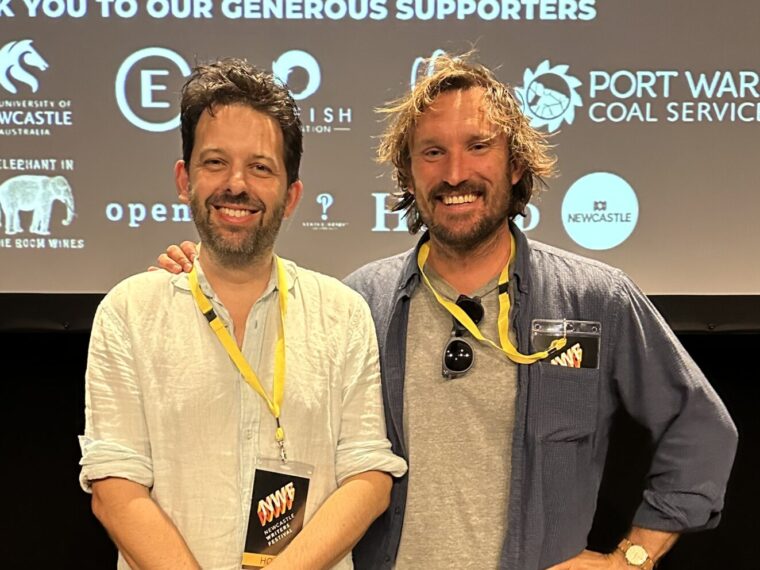
Sydney Writer’s Festival photos

Last week’s first public event for the new book by Jeff Sparrow and yours truly, Left  Turn:

And the 2012 PEN Free Voices lecture:

The rest of the collection is here.

no comments

Getting #LeftTurn debate going over gay marriage and equality

A book I co-edited with Jeff Sparrow, Left Turn, is about to launch.

One of the contributors, Rodney Croome, a strong advocate of gay marriage, has written a powerful piece in ABC’s The Drum about this issue:

The American civil rights movement was a colourful but hollow distraction from the far more important issue of America’s war in Vietnam, and that is why presidents Kennedy and Johnson supported it.

If you find this statement trite, offensive and wrong then you may react the same way when you read John Pilger’s analysis of Barack Obama’s support for same-sex marriage.

Pilger believes the Obama administration is attempting to divert attention from wars abroad and wealth disparity at home, and raise more money from Hollywood, by endorsing marriage equality.

He has no evidence for these links. His analysis also doesn’t explain why Obama took so long to “evolve” on the issue and seems to have been moved to act by an unscripted endorsement of the issue by Joe Biden. 

Nor does Pilger allow for the fact that a cause can be right even if the motives of some of its supporters are less than pure, or just not the same as his.

Pilger would probably respond by saying my comparison between black civil rights and same-sex marriage is unfair because, in his words, the latter is about “lifestyle liberalism”.

Such a casual dismissal of marriage equality is not just because Pilger doesn’t believe marriage matters much. He believes marriage is part of the problem: “The rights historically associated with marriage are those of property: capitalism itself,” he writes.

“Bourgeois acceptability is not yet a human right.”

Pilger’s same-sex marriage blind spot is not uncommon among left-wingers his age. Many older lefties retain an outdated view of marriage as an instrument of male domination over women, the middle class’s domination over workers, and God’s domination over us all.

They refuse to see that the institution has been reformed, at least in the West, so that women, workers and non-believers now have much more autonomy to decide how, when and if they wed, how they conduct their marriage (including whether or not they have kids), and if and when their marriage will end.

They refuse to acknowledge that it is precisely this change which has made same-sex marriage an issue: now that marriage is a choice for the majority, it makes sense to ask why it isn’t a choice for the minority.

Why can’t John Pilger see any of this? Is it just his distaste for marriage?

In his use of the phrases like “lifestyle liberalism” and “bourgeois acceptability”, I hear echoes of the old left’s suspicion of homosexuals. To those who held this suspicion, gays were too prone to being flippant sentimentalists, fawning courtiers, and fascist closet-cases. We were too soft, too easily co-opted or just too different to be part of a movement that demanded solidarity. 

Suspicion of gays paralleled a similar, older suspicion of Jews, and it saw members of both groups being accepted within the Left only if they showed extraordinary commitment (Pilger’s WikiLeaking hero, Bradley Manning, being a case in point). 

Rodney Croome AM is the campaign director of Australian Marriage Equality and the co-author of Why v Why: gay marriage. He has contributed an essay on the Left and marriage equality to ‘Left Turn: Political Essays for the New Left’, edited by Antony Loewenstein and Jeff Sparrow (MUP), out June 1.

2 comments

US 60 Minutes profiles the Tel Aviv bubble (and Palestinians get barely mentioned)

After the show’s recent coverage of Israeli apartheid against Christians in Palestine caused a massive stir, it’s hard not to see this latest piece as a way of kissing and making up with the Zionist lobby. Despite the fact that the story features Haaretz reporter Gideon Levy telling US viewers that the Tel Aviv bubble allows Jews to ignore its brutal occupation down the road, racism in Israel continues apace. Just hear Netanyahu talking about “illegal” refugees poisoning the chances of Israel to thrive as a “Jewish and democratic state”:

3 comments

ABC Radio National interview on free speech and human rights

The last four days have involved extended time at the Sydney Writer’s Festival. There was the first public event for my forthcoming book with Jeff Sparrow, Left Turn. There wasn’t a spare seat in the house. They’ll be far more about this title in the next days and weeks, so stay tuned.

The following day I delivered the 2012 Sydney PEN Free Voices lecture. I will be giving the speech in Melbourne in June and it will be published soon along with the vision of my Sydney address.

Before the PEN lecture, I was interviewed by ABC Radio National about the themes of the talk. Forgive the not perfect audio here, it was recorded on my iPhone:

Audio clip: Adobe Flash Player (version 9 or above) is required to play this audio clip. Download the latest version here. You also need to have JavaScript enabled in your browser.

no comments

Leading neo-con Bill Kristol has no issue with Israeli apartheid

More here.

no comments

Zionist state committing suicide with its eyes open

A new BBC poll finds popularity of Israel at a welcome low globally.

These numbers in Australia reveal the profound disconnect between political elite opinion and the general public:

In the EU countries surveyed, views of Israeli influence have hardened in Spain (74% negative ratings, up 8 points) and in France (65%, up 9 points) — while positive ratings remain low and steady. Negative ratings from the Germans and the British remain very high and stable (69% and 68%, respectively). In other Anglo-Saxon countries, views have worsened in Australia (65% negative ratings, up 7 points) and in Canada (59%, up 7 points).

And what do most Israelis think? A new review in the New York Review of Books by David Shulman, discussing Peter Beinart’s book The Crisis of Zionism, argues this:

How did we reach this point? Why do Israelis cling to a policy so evidently irrational, indeed suicidal? The simple—too simple—answer is: we’re afraid. We’ve been so traumatized, first by our whole history and then by the history of this conflict, that we want at least an illusion of security, like the kind that comes from holding on to a few more rocky hills. Never mind that every inch of Israel is within range of tens of thousands of missiles currently stationed in Lebanon, Syria, and Gaza, not to mention Iran, and that a few more square kilometers make no difference to that threat. We’ll still take over those West Bank hills, and we’ll even put a few rickety caravans on them for anyone crazy enough to want to live there, and we’ll station a few dozen bored soldiers on top of each of them and all around them, and we’ll connect them to the Israeli electricity grid and the water system, and we’ll build a big perimeter fence to enclose the new settlement and to provide land for it to grow on (usually many times the size of the settlement itself). The land happens to belong to Palestinians, but that, clearly, is a consideration of no relevance here.

The fears of Israelis are no doubt real enough, and a generous interpretation of Israeli policy over the last four decades would give them due emphasis. As Ali Abu Awwad, one of the leaders of the new generation of Palestinian nonviolent resisters, often says: “The Jews are not my enemy; their fear is my enemy. We must help them to stop being so afraid—their whole history has terrified them—but I refuse to be a victim of Jewish fear anymore.” He’s right to refuse. But I think the reality we inhabit and have largely created by our own actions has more to do with the story we Israelis tell ourselves about who we are—a powerfully dramatic story that, like many such mythic stories, has a way of perpetuating itself, at continually escalating cost to those who tell it. This story more and more coincides with the primitive Netanyahu narrative I mentioned earlier.

To get away from it, we need to recognize certain primary facts, however uncomfortable they may be for some of us. As has been the case in the past, there are always easily available diversions and distractions that mask the true basis of the ongoing struggle; in Israel today, the main such diversion is called “Iran.” Along with such distractions we have the Israeli refusal to see the present Palestinian leadership in Ramallah for what it is, a more than adequate partner for Israel. Those who don’t agree should be thinking about men such as Marwan Barghouti, still biding his time in an Israeli jail. He’s no saint, to be sure, but he enjoys enormous authority among Palestinians, and he knows very well what is required to strike a deal. There is good reason to believe that he wants such a deal, along the lines that are by now recognized as reasonable by a majority on both sides of the conflict and, indeed, by most other nations. He has recently published a strong statement calling for mass nonviolent resistance in the territories and an end to the farce of a negotiating “process” that has allowed Israel to stall endlessly—and to hide its deeply rooted hostility to the very idea of coming to some form of agreement with the Palestinian national movement.

To prolong the occupation is to ensure the emergence of a single polity west of the Jordan; every passing day makes a South African trajectory more likely, including the eventual, necessary progression to a system of one person, one vote. Thus the likelihood must be faced that unless the Occupation ends, there will also, in the not so distant future, be no Jewish state.

no comments